How to upsell cybersecurity services by turning security gaps into recommendations clients trust
A security gap is a finding before it is a sales opportunity. How MSPs and MSSPs can upsell cybersecurity services with evidence instead of pressure.
- A security gap is a finding before it is a sales opportunity. Clients buy recommendations they can check against their own environment, not scenarios they have to take on faith.
- Not every gap calls for a new service. Fixing what the current agreement already covers, and pointing to tools the client already owns, is what makes the remaining recommendations credible.
- Recommendations work best as a standing agenda item: findings raised when they appear, recorded with the client's decision, and revisited in regular reviews instead of at renewal.
In this article
- Why most security sales conversations stall
- What counts as a security gap
- Not every gap is an upsell
- From finding to recommendation in five steps
- Fear-led selling vs. evidence-led recommendation
- Prioritize what to raise first
- When the client pushes back
- Make gaps a standing agenda item
- Where Mahoney Grow fits
- Frequently asked questions
Every managed service provider has seen the slide. A red heat map, a list of “critical findings,” and a bundle price at the bottom. The client nods, asks for time to think, and the deal quietly stalls. Sometimes it closes. Then, a year later, the same client asks why the bill went up while nothing seemed to change.
Security gaps are real, and closing them is often the most valuable thing you can do to help clients manage their cyber risk. But a gap is a finding before it is a sales opportunity. Treat it as a pitch first and you lose the one thing that makes any recommendation land: the client’s belief that you would have raised it anyway, even if there were nothing to sell.
This article is for managed service providers (MSPs) and managed security service providers (MSSPs) who want to upsell cybersecurity services to existing clients: how to turn a security gap into a recommendation the client can check, weigh, and decide on.
Why most security sales conversations stall
The problem is rarely the cybersecurity solution you are offering. It is how the gap reaches the client.
- Fear does the selling. Breach headlines and worst-case cyber threats get attention, but they also put the client on the defensive. A decision made under pressure is easy to reverse at the next budget review.
- The gap is generic. “Companies like yours are being targeted” describes everyone. The client can’t see their own environment in it, so they can’t judge whether it applies.
- The offer is bigger than the gap. A finding about unpatched laptops turns into a full security package. The client senses the mismatch and discounts the whole conversation.
- It shows up at renewal. If the first time a gap is mentioned is the week the contract is up, the client reads it as a price increase with a story attached.
Each of these turns a legitimate finding into something that looks like a sales tactic. What helps is a better path from finding to recommendation.
What counts as a security gap
A security gap is the difference between the cybersecurity protection a client has agreed they need and what their environment actually shows. Both halves matter. Without an agreed baseline, every gap is your opinion. Without evidence from the environment, every gap is a guess.
That is why a structured cybersecurity gap analysis, or a broader risk assessment, is the right starting point for any conversation about additional services. In practice, most findings fall into one of three kinds:
| Kind of gap | What it looks like | Where the evidence comes from |
|---|---|---|
| Coverage | Devices or accounts that no security tool sees | Your RMM and endpoint inventory, compared with what the client says they run |
| Process | Controls that exist but don’t keep up, such as patches applied long after release or backups that were never test-restored | Patch status, backup reports, ticket history |
| Governance | A documented policy that day-to-day operations no longer match | Policy documents set against what the logs actually show |
The kind of gap tells you a lot about the right answer. A coverage gap often needs more licenses or a new tool. A process gap often needs nothing new at all, only time and discipline inside the current scope. A governance gap may need a decision from the client’s leadership rather than a purchase from you.
Where a gap does call for new work, the services are familiar ones. Coverage gaps often lead to extending endpoint detection and response, multi-factor authentication, or monitoring to the devices and accounts that sit outside them. Process gaps the current scope can’t absorb may lead to managed patching or scheduled restore tests. Governance gaps may lead to policy work, security awareness training, or virtual CISO hours. Which service fits is decided by the gap, which is why the evidence comes first.
Not every gap is an upsell
This is the part that builds trust, and it is easy to skip.
Before a gap goes into a proposal, sort it honestly:
- Fixable within the current agreement. A misconfiguration, a missed patch cycle, an agent that stopped reporting. If it is your job under the existing scope, fix it and report that you did. Billing for that work costs more trust than the invoice earns.
- Fixable with tools the client already owns. Many clients pay for security solutions with features they never switched on. Telling them so is the reason they will believe you when something genuinely needs a new investment.
- Needs new scope or a new tool. This is a genuine opportunity to sell cybersecurity services: a gap, backed by evidence, that the current agreement doesn’t cover.
- The client chooses to accept the risk. Some gaps are not worth closing for a given business. That is the client’s call, within the obligations that apply to the client, such as contract terms, insurance conditions, or regulatory requirements. Record the decision and the date, and revisit it when circumstances change.
When a client sees you sort findings this way, the third category stops looking like a sales tactic.
From finding to recommendation in five steps
A recommendation the client can act on has the same parts every time.
- Show the evidence from their environment. Not an industry statistic, but the client’s own data: how many devices sit outside endpoint protection, how far patching runs behind, which backups haven’t been tested. If you can’t point to the data, the finding isn’t ready for the client.
- Translate it into consequences for their business. Which systems, which people, and which customers would be affected if an attacker took advantage of this gap? What would it mean for business continuity and for incident response? Keep it concrete and proportionate. The goal is understanding, not alarm. Make sure this explanation reaches the person who owns the budget as well as your day-to-day IT contact.
- Offer options, including the cheap ones. Fix the gap within the current scope where possible, use existing tools where they fit, or extend your cybersecurity services where existing tools fall short. Put “accept the risk” on the list too. A client who has a real choice trusts the option you recommend.
- State what it costs and what changes. Price, effort, and the difference the client should see afterward, such as coverage, patch status, or a tested restore. If you want to demonstrate the value in dollars or talk about ROI, keep counted and modeled figures apart. Our guide on how to show clients the value of cybersecurity walks through the method.
- Let the client decide, and write it down. Approved, deferred, or accepted as risk, the decision belongs to the client. A written record gives both sides a clear reference and gives the next review a starting point.
Fear-led selling vs. evidence-led recommendation
| Fear-led selling | Evidence-led recommendation | |
|---|---|---|
| Starting point | A threat scenario or an industry headline | A finding in the client’s own environment |
| Scope of the offer | A bundle, often larger than the gap | Sized to the gap, with smaller options listed |
| What the client can check | Very little | The data behind the finding and the expected change |
| Timing | Renewal season | When the finding appears, reviewed on a regular cadence |
| What happens after a “no” | The topic is dropped or pushed harder | The decision is recorded and revisited |
| Effect on the relationship | Each attempt spends trust | Each recommendation adds a reason to believe the next one |
The right column takes more work to prepare. It is also the version a client’s finance lead can forward to the owner without rewriting it.
Prioritize what to raise first
Most environments show more cybersecurity gaps than any client can address at once. Raising all of them together is its own kind of pressure. A simple order helps:
- Exposure first. Gaps that leave systems or data reachable without protection outrank everything else.
- Then what the client has to prove. Gaps that affect what the client must show customers or insurers, or prove under a contract, carry weight the client already understands. Our guide to the vendor security questionnaire shows what the client’s own customers typically ask for.
- Then service quality. Slow resolution, recurring alerts, and noisy detections wear down the client’s trust long before anything is breached. Our article on SOC metrics that matter covers which of these numbers are worth tracking.
Two or three well-prepared recommendations per review usually do more than a list of twenty. The rest stay on the record, visible and dated, for the next conversation.
When the client pushes back
Objections are information. Each common objection points to something the recommendation hasn’t answered, often a pain point you haven’t fully understood.
- “We’ve never had a problem.” That may be true, and it is worth saying so. Point back to the evidence: the gap describes what the environment shows today, not a prediction that something will happen.
- “It’s not in the budget.” Offer the smaller options first, and ask whether the client wants to plan it for the next budget cycle. A deferred recommendation with a date is still a decision.
- “Isn’t this what we already pay you for?” Sometimes the honest answer is yes. If the gap falls inside the current scope, it belongs in the first category above: fix it and report it.
If you can’t answer an objection with the client’s own data, the recommendation probably wasn’t ready yet.
Make gaps a standing agenda item
Recommendations for additional services work best when the client expects them as part of how you report, not as a separate event.
- Keep a gap register per client. Every finding, its kind, its evidence, the options, and the client’s decision. It becomes the shared memory of the relationship.
- Review it on an agreed cadence. Use a meeting you already hold with the client, such as a quarterly review. A finding raised there reads as information rather than as a pitch.
- Report what you closed, not only what you found. Gaps fixed within the current scope belong in the report too. They show the client what the existing agreement already delivers.
- Revisit accepted risks. Circumstances change: a new office, a new customer contract, a new system. A risk the client accepted last year may deserve a fresh look, and raising it is part of the service.
Over time, the client stops bracing for a sales conversation and starts asking what the register shows.
Where Mahoney Grow fits
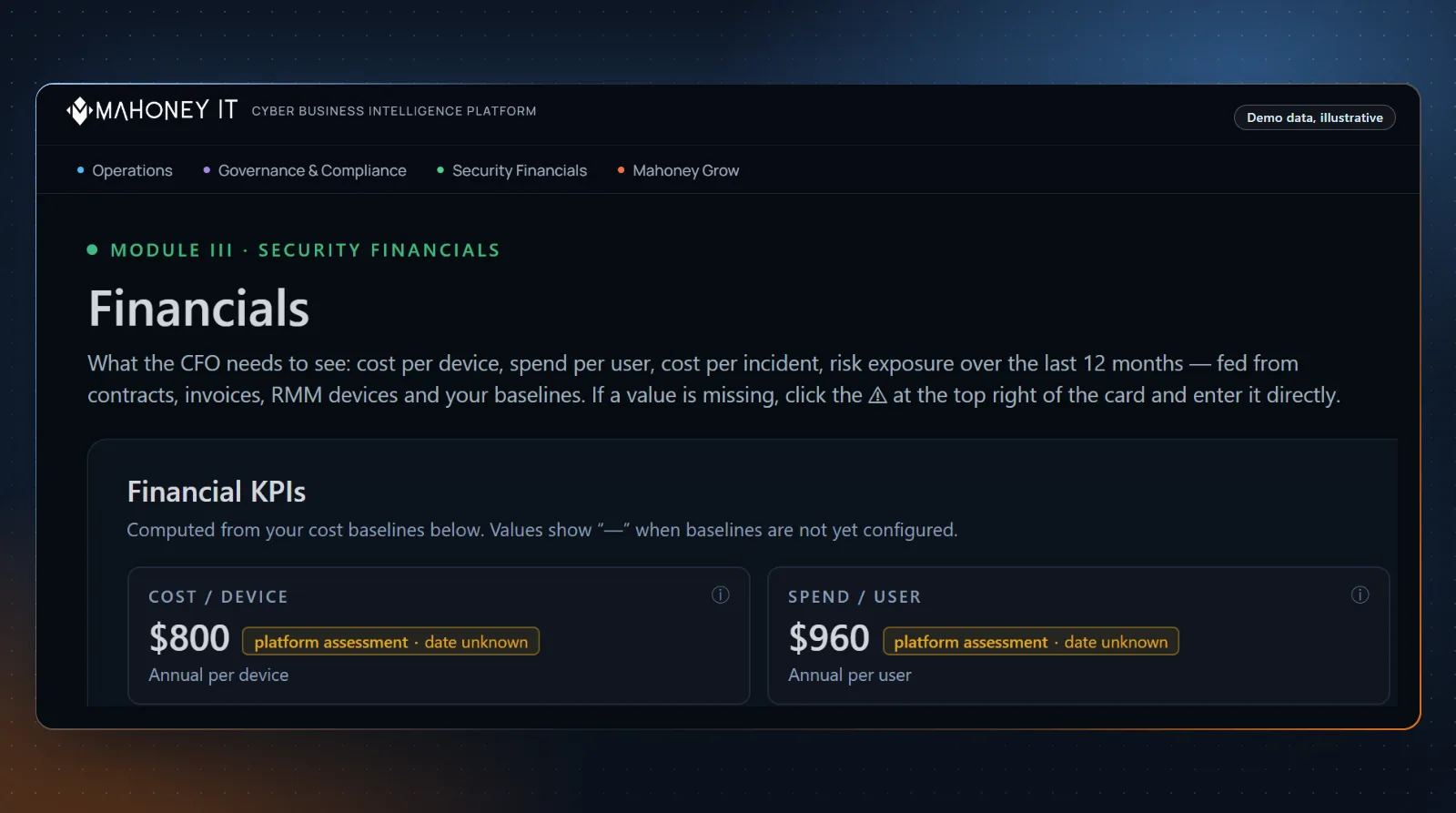
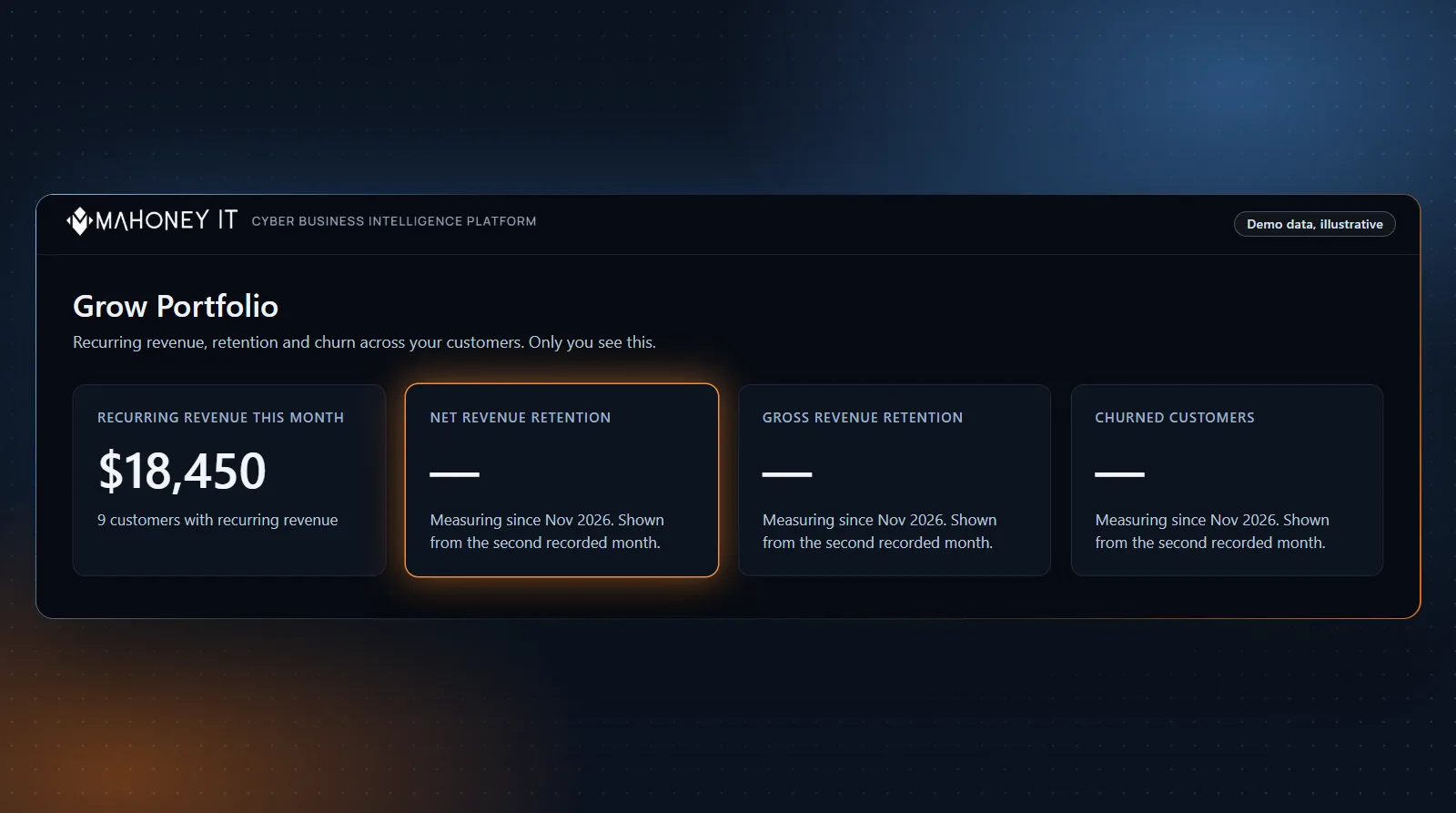
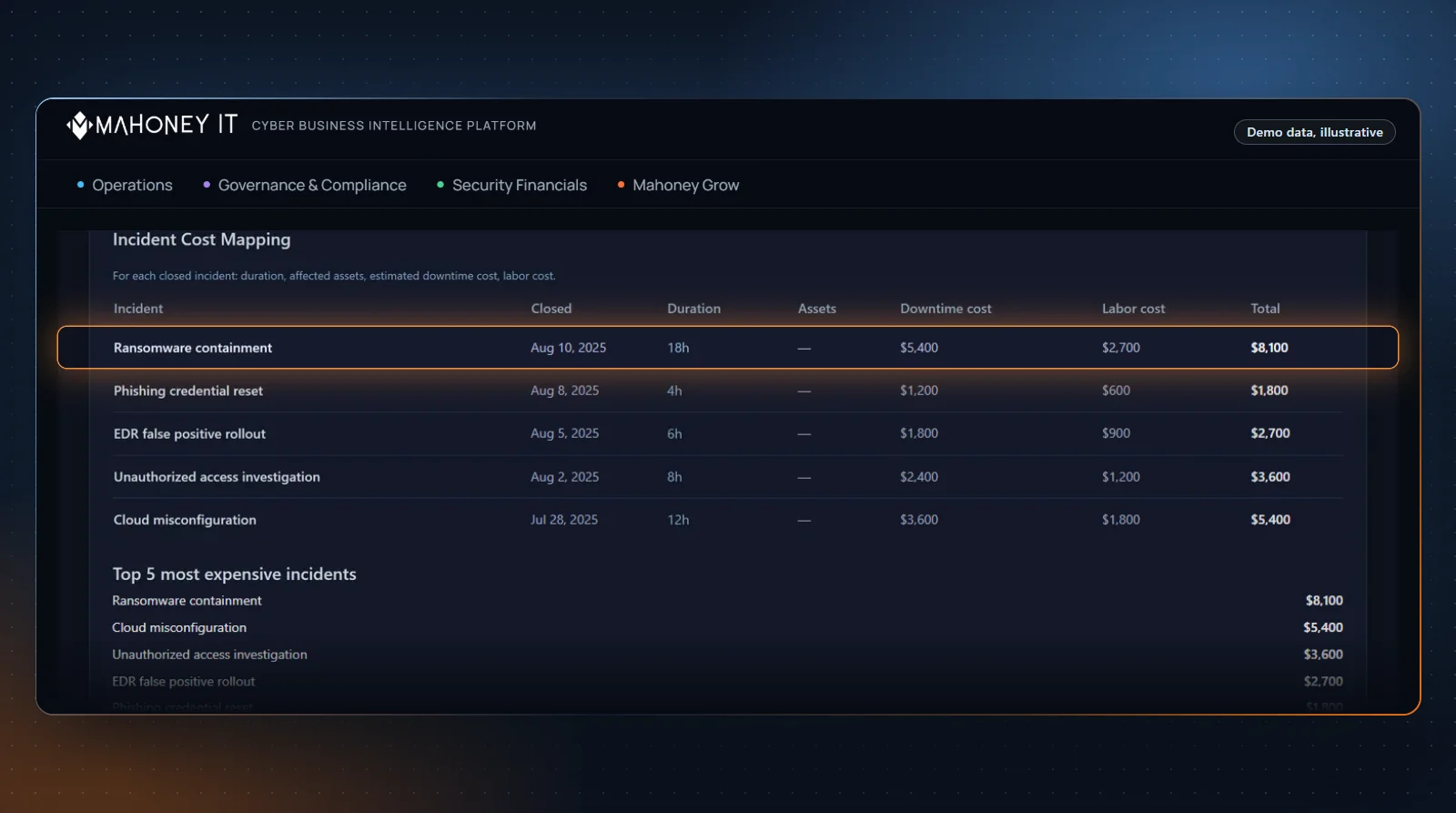
The method in this article needs no particular tool. Mahoney Grow, the Growth Intelligence module of Mahoney Control, can help with the evidence behind some process gaps, such as low patch compliance. It reads signals already in your telemetry and needs no new sensors.
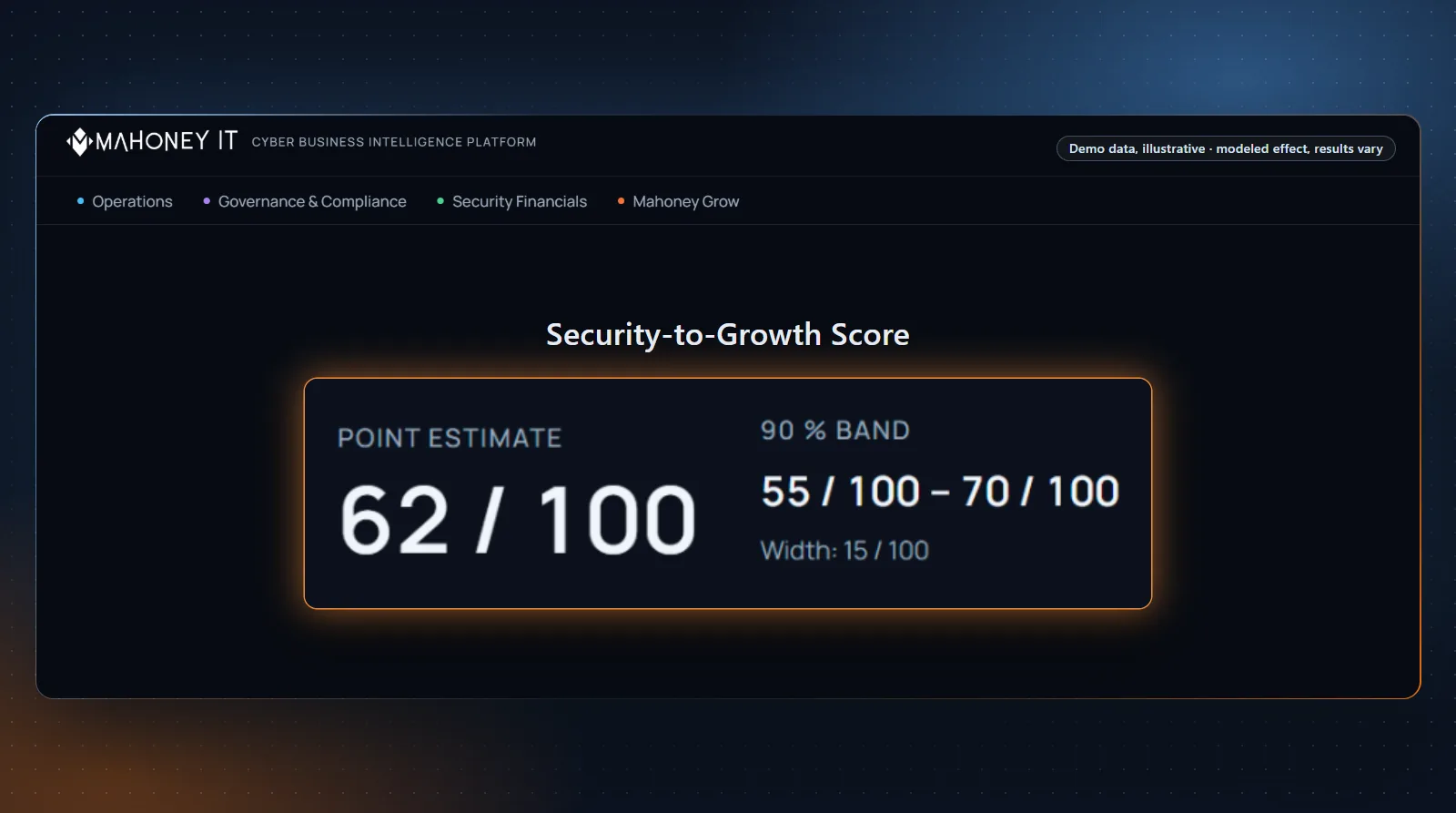
Once telemetry is connected, the platform computes its models automatically: anomaly detection, a 30-day risk forecast with a confidence band, and the Security-to-Growth Score. Until enough of a client’s own history exists, the risk forecast in Mahoney Grow shows a clearly marked platform default instead of that client’s own model. A client with access to Mahoney Grow also sees the optimization opportunities in its own view, and items you manage carry a “Managed service” badge and a note that you manage them as part of the service, so the client’s team has nothing to do.
Two limits apply. First, the outputs of these models are modeled and advisory: they support a decision, they don’t guarantee an outcome. Second, what you recommend to a client remains your call, and whether to act on it remains the client’s decision.
Mahoney Control is multi-tenant, with strict tenant isolation per client. Availability of Mahoney Grow depends on the plan; see pricing for details.
You can read more on our Growth Intelligence overview. If you’d like to walk through how Mahoney Grow could fit your portfolio, request a no-obligation consultation.
Frequently asked questions
How do MSPs upsell cybersecurity services without pressuring clients? Start from evidence in the client’s own environment, not from threat headlines. Size the recommendation to the gap and list the alternatives next to it: a fix within the current scope, the client’s existing tools, or accepting the risk within the obligations that apply to the client. Then let the client decide. A recorded decision, even a “no,” keeps the topic open for the next review without turning it into pressure.
What is a security gap in an MSP client environment? A security gap is the difference between the protection a client has agreed they need and what their environment actually shows. Common kinds are coverage gaps (devices or accounts no security tool sees), process gaps (controls that exist but don’t keep up, such as late patching or untested backups), and governance gaps (documented policies that day-to-day operations no longer match).
Should every security gap become a sales opportunity? No. Some gaps are fixable within the current agreement and should simply be fixed and reported. Some can be closed with tools the client already owns. Only gaps that are backed by evidence and that neither the current scope nor the client’s existing tools can close are genuine opportunities for new services, and within the obligations that apply to the client, the client may still choose to accept the risk.
When is the right time to recommend additional security services? When the finding appears, and again in regular client reviews, rather than for the first time at renewal. A gap raised in an ordinary review reads as information. The same gap raised the week the contract is up reads as a price increase with a story attached.
How many security recommendations should go into one client review? Usually two or three well-prepared ones, ordered by exposure first, then by what the client must show customers or insurers or prove under a contract, then by service quality. The remaining findings stay in a gap register, visible and dated, for the next review.
What if the client says no to a security recommendation? Record the decision, the date, and the reasoning the client gave, and revisit it when circumstances change, such as a new location, contract, or system. Within the obligations that apply to the client, accepting a risk is a legitimate business decision, and documenting it gives both the client and the MSP a clear record.
This article is general information on presenting security findings and recommendations to clients. It does not constitute legal, financial, or insurance advice. Model outputs in Mahoney Grow are modeled and advisory and do not guarantee outcomes. Decisions about accepting risk remain subject to the client’s contractual, insurance, and regulatory obligations.
Drafted with AI assistance, checked against our platform and website, and reviewed by Mahoney IT. How we write